STEAM Gem Tensegrity Build System
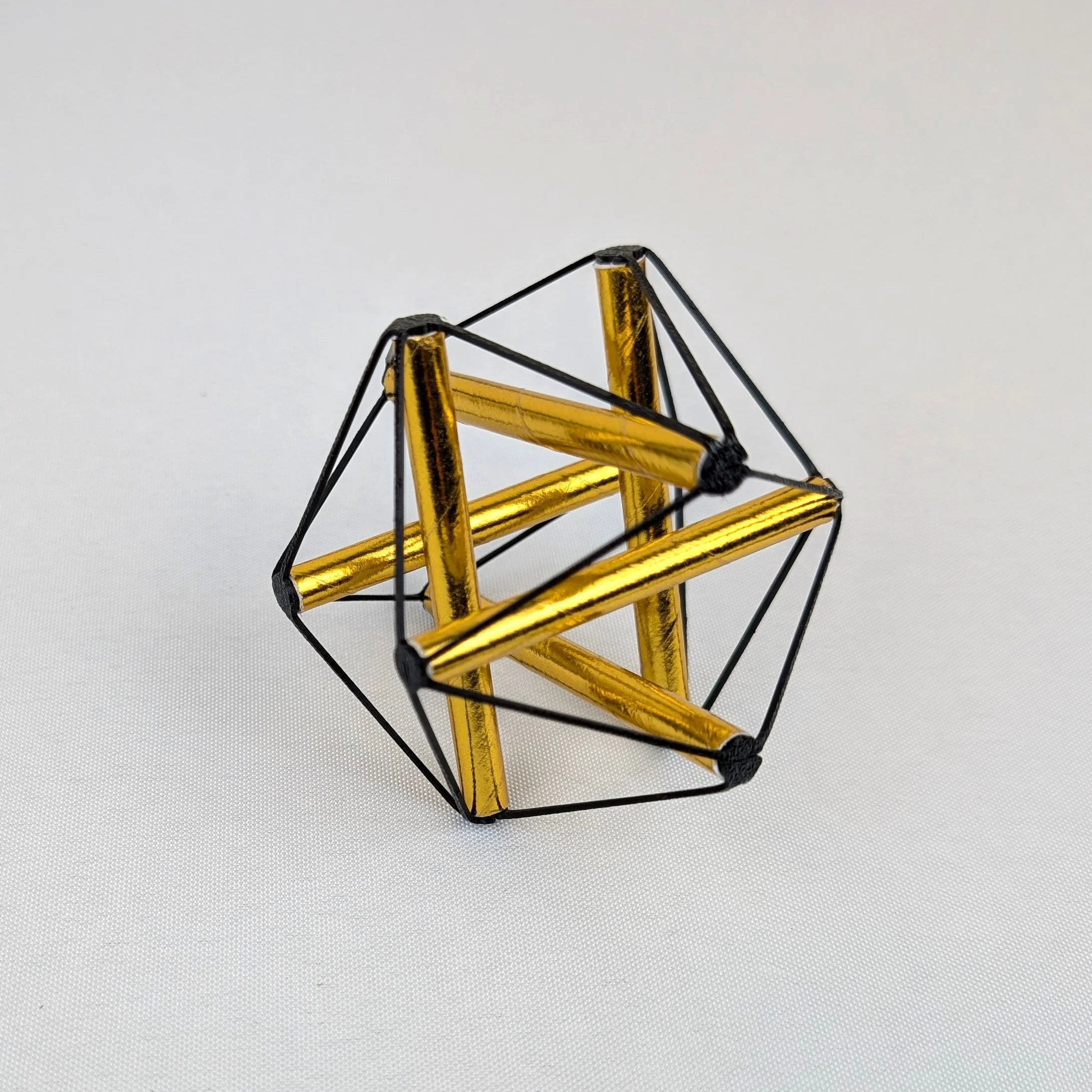
Icosahedron
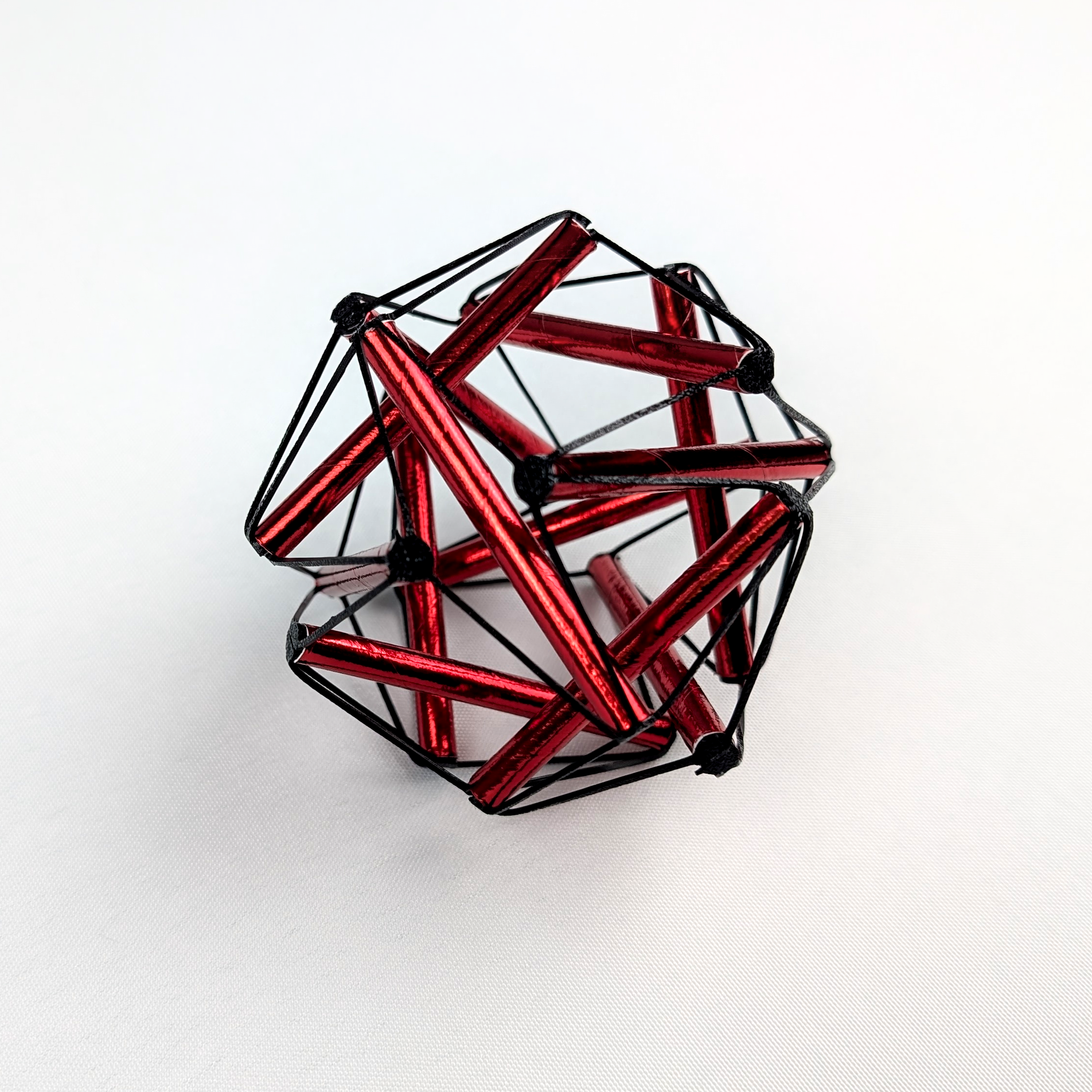
Cuboctahedron
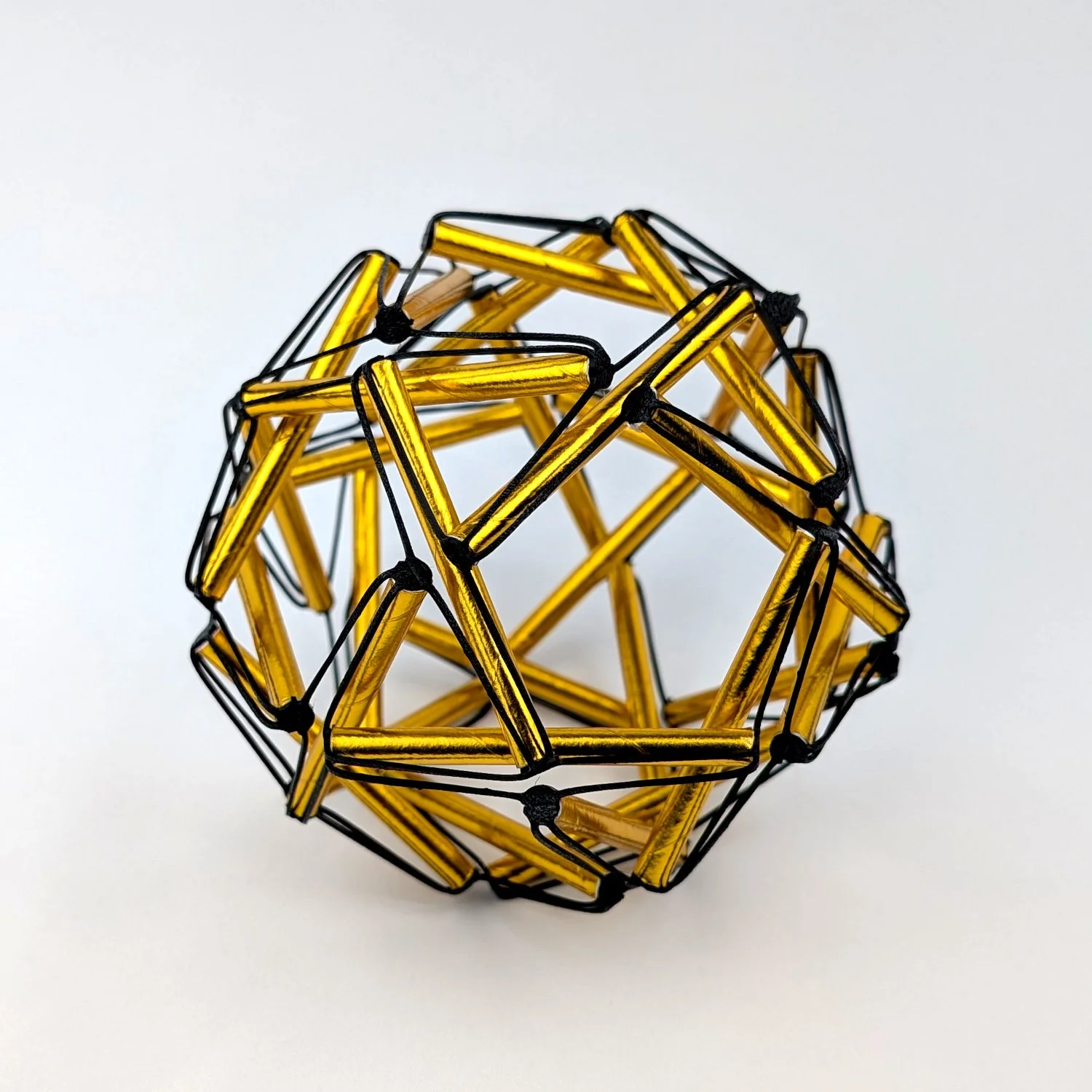
Icosidodecahedron
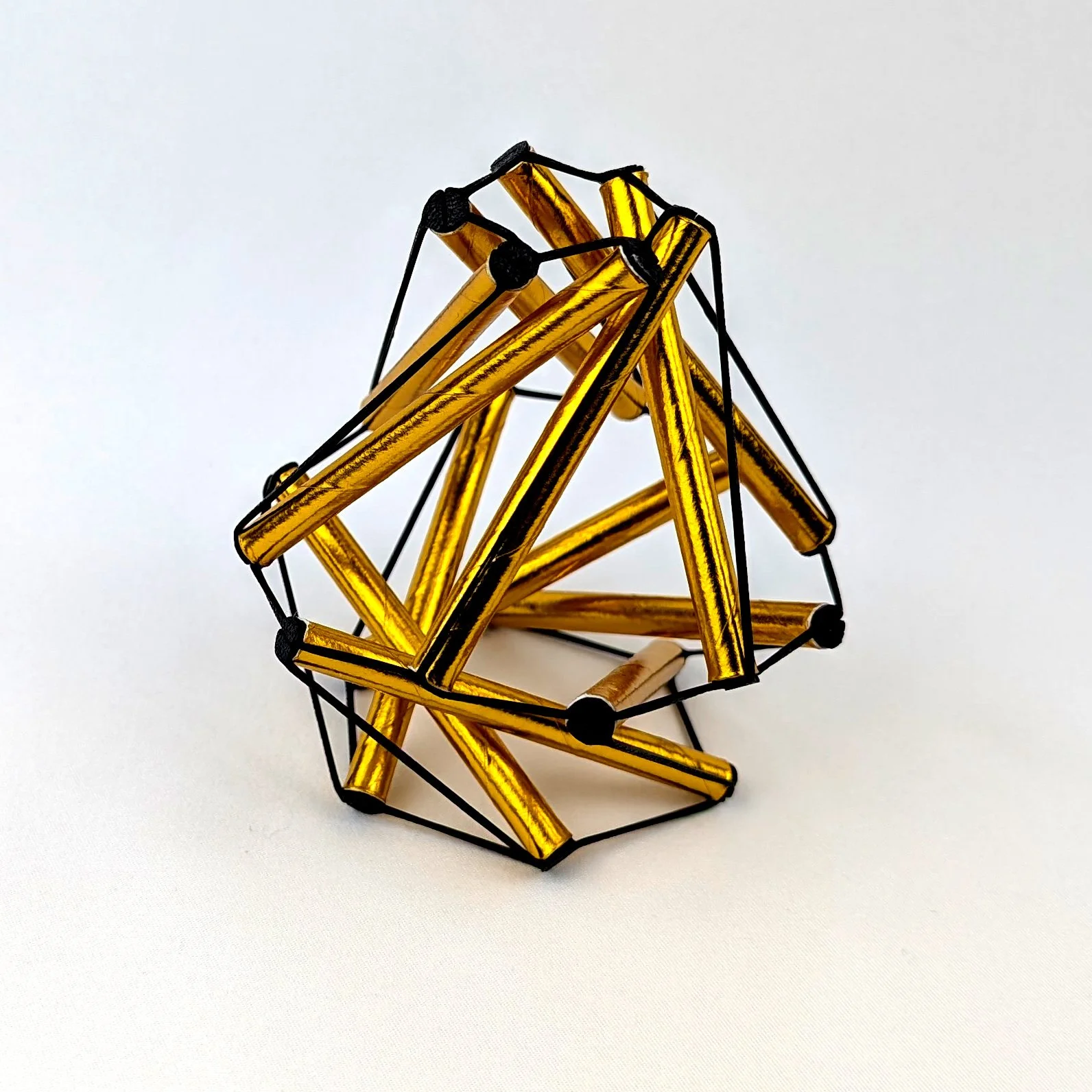
Genie Bottle
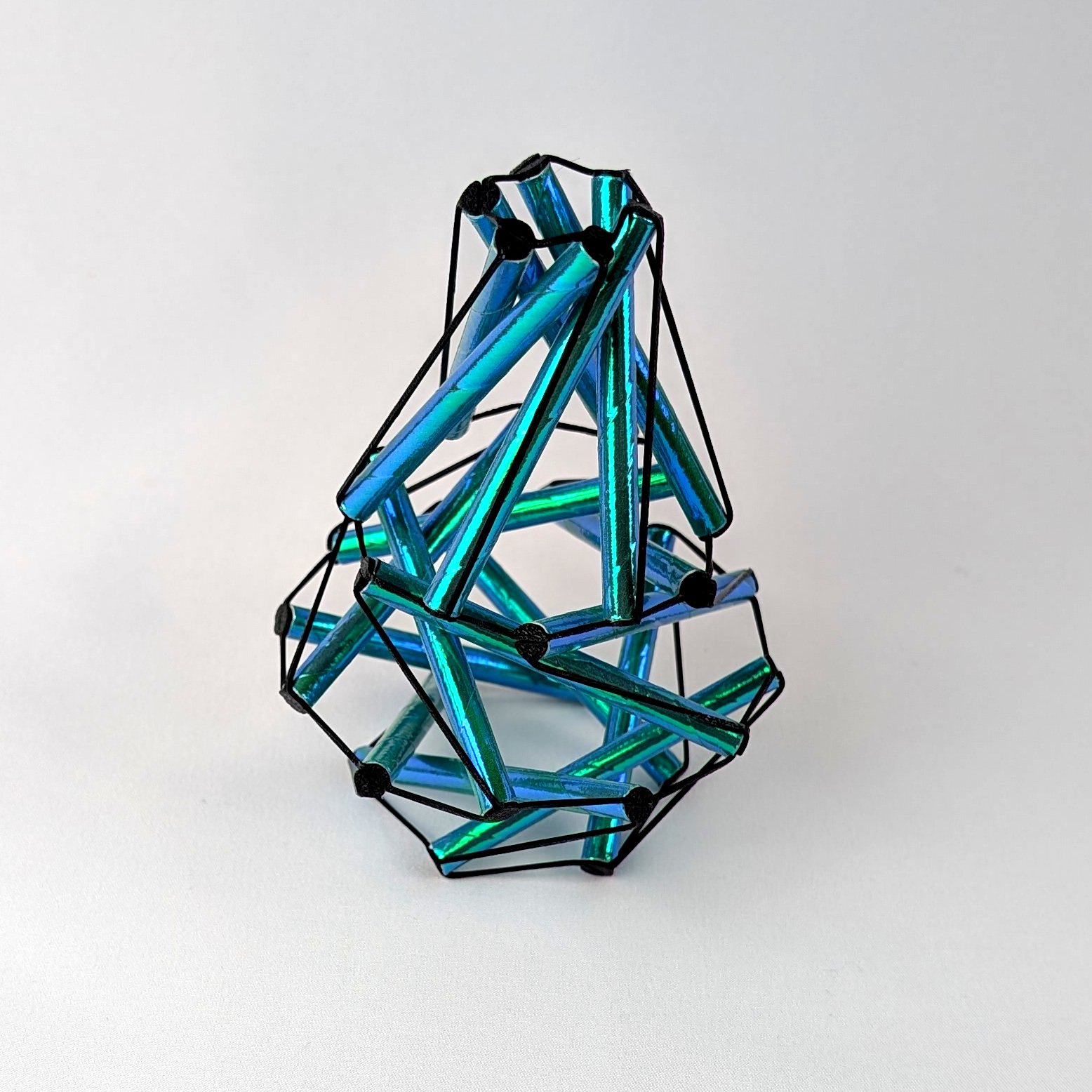
Queen Genie
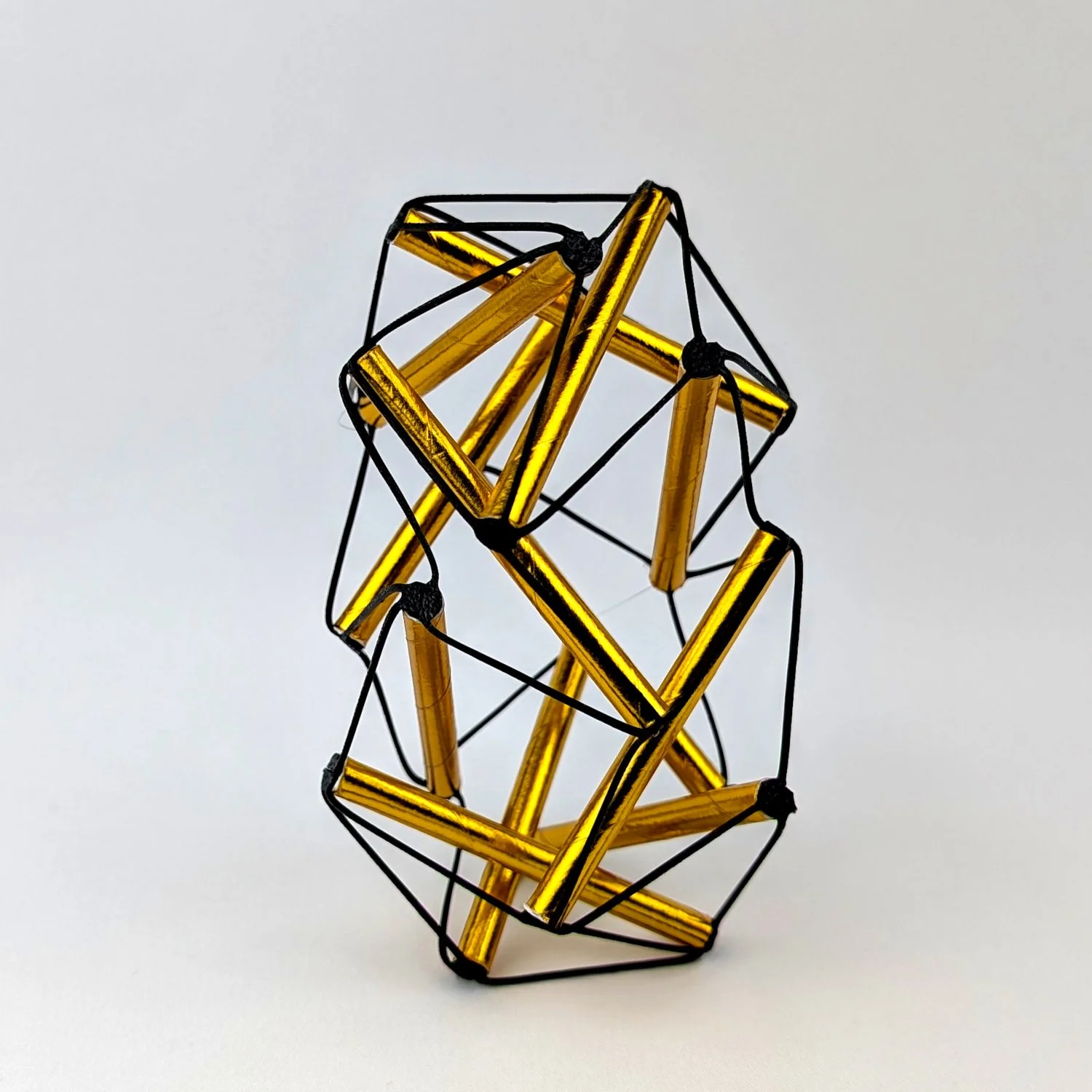
Extended Icosahedron
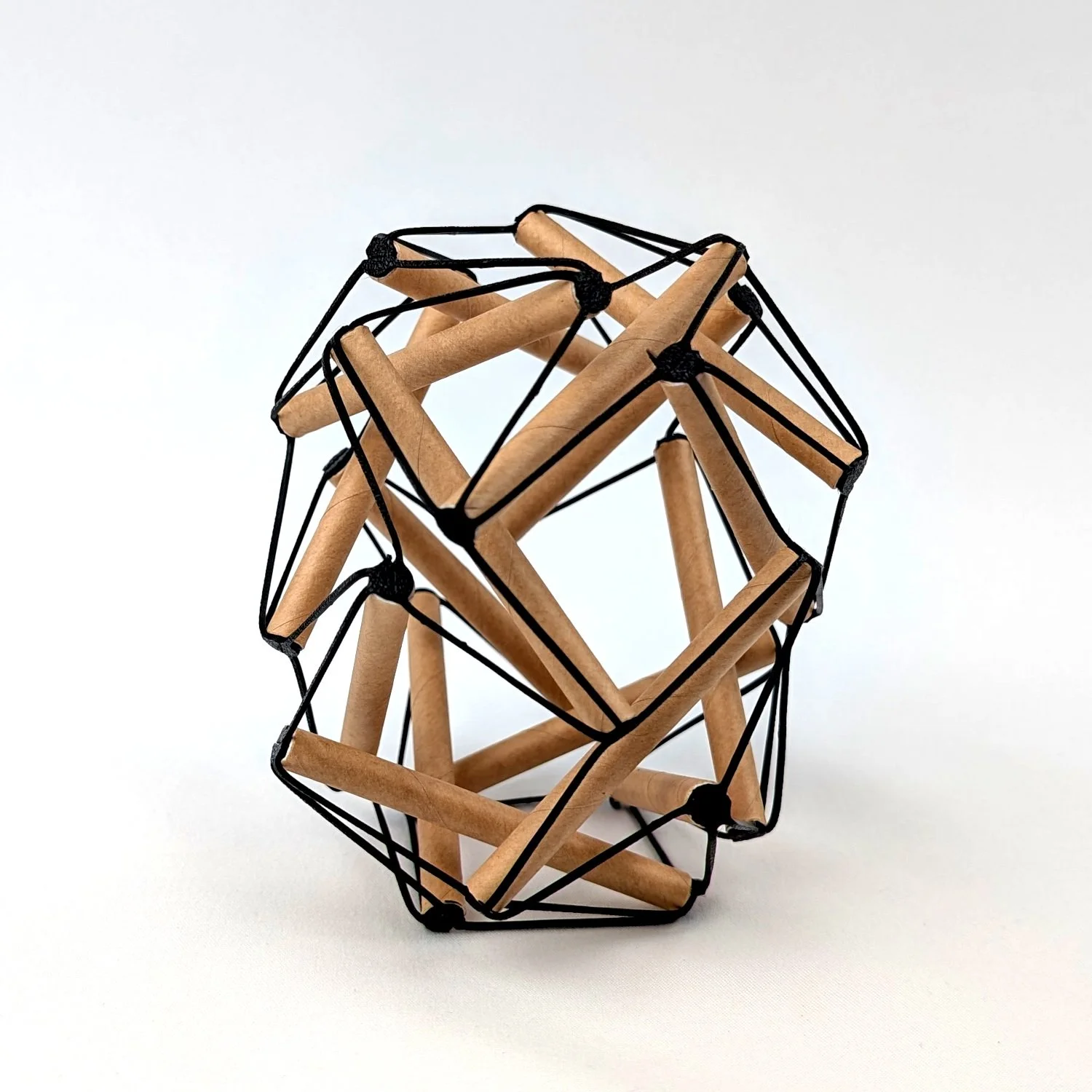
Extended Cuboctahedron
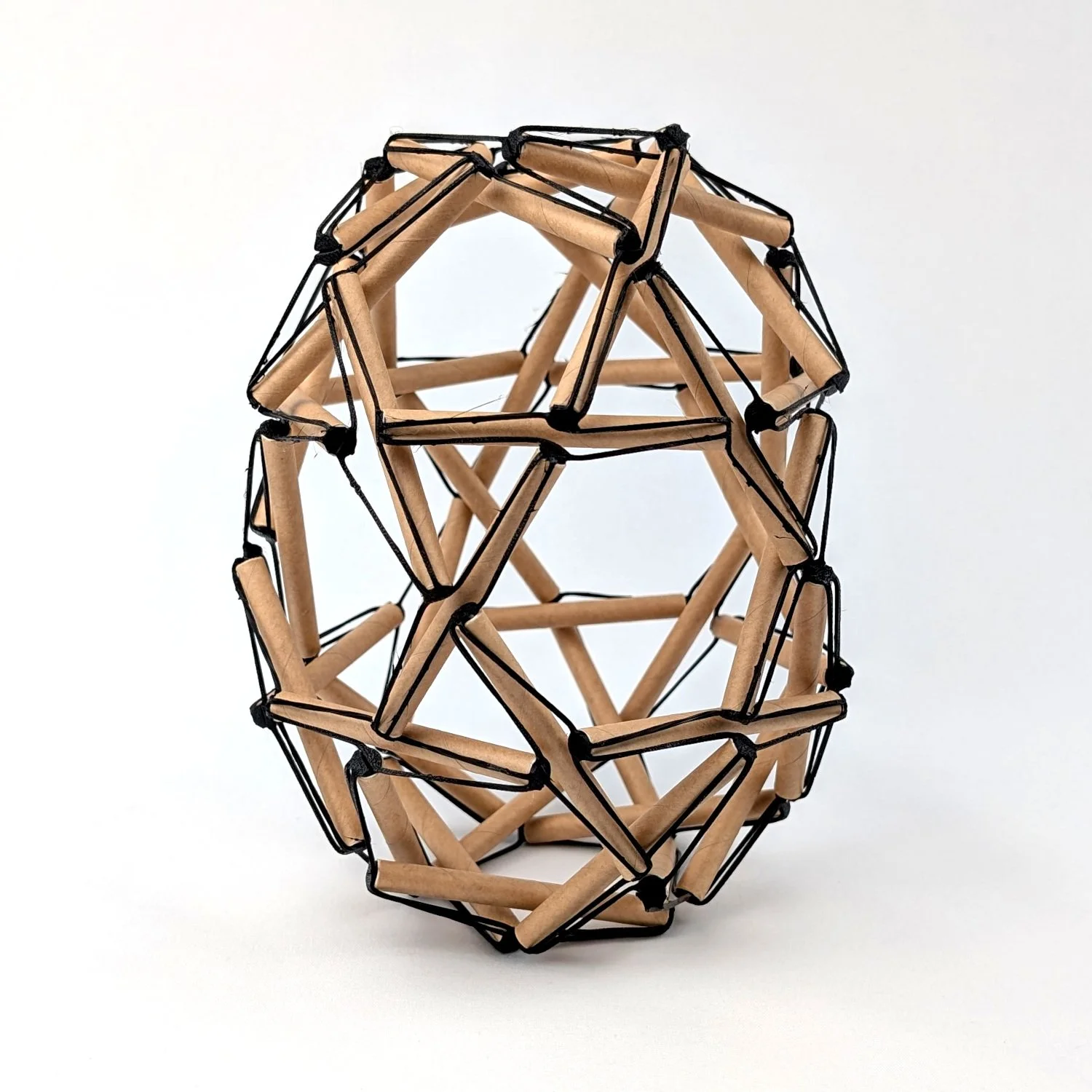
Extended Icosidodecahedron
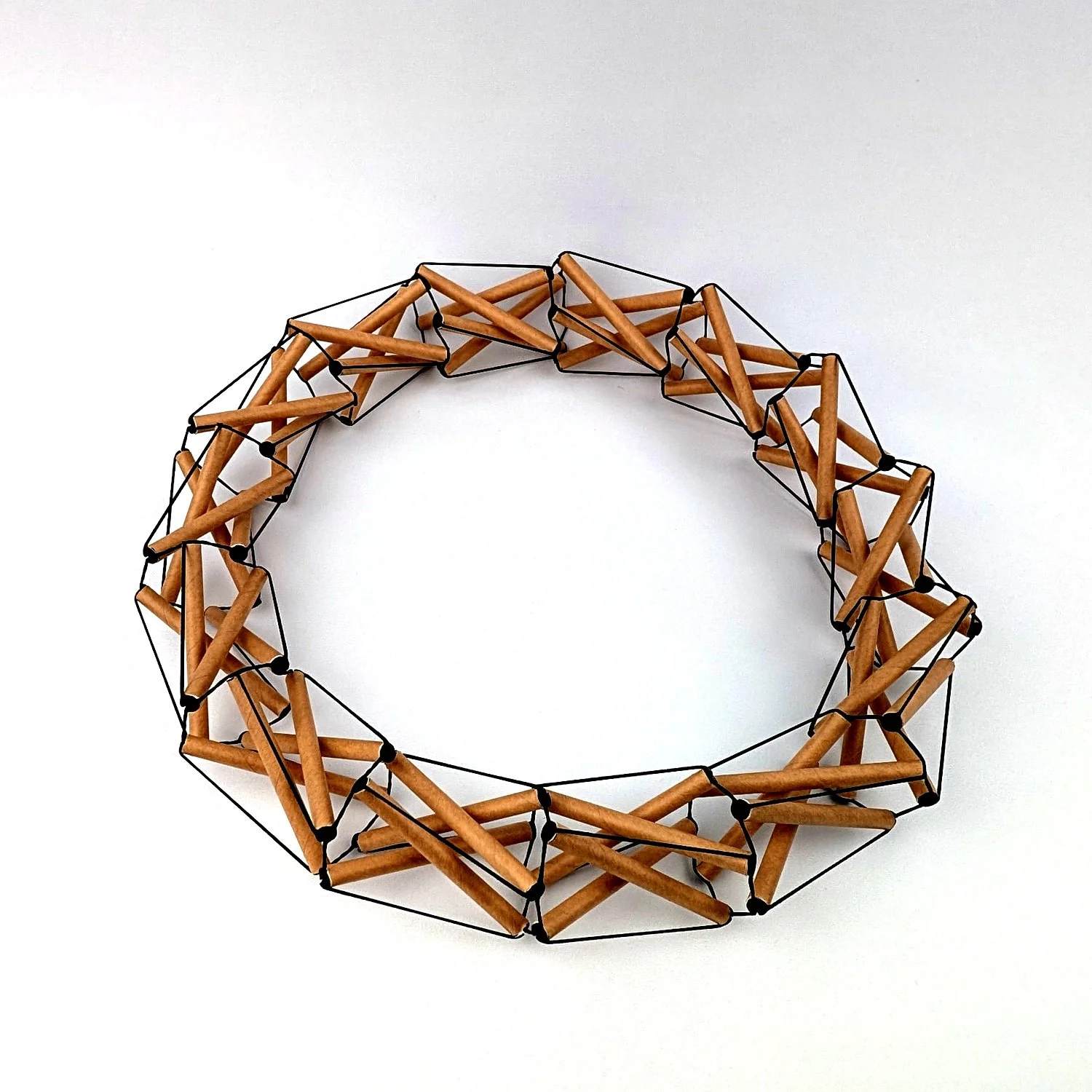
Prism Tower Torus 4x14
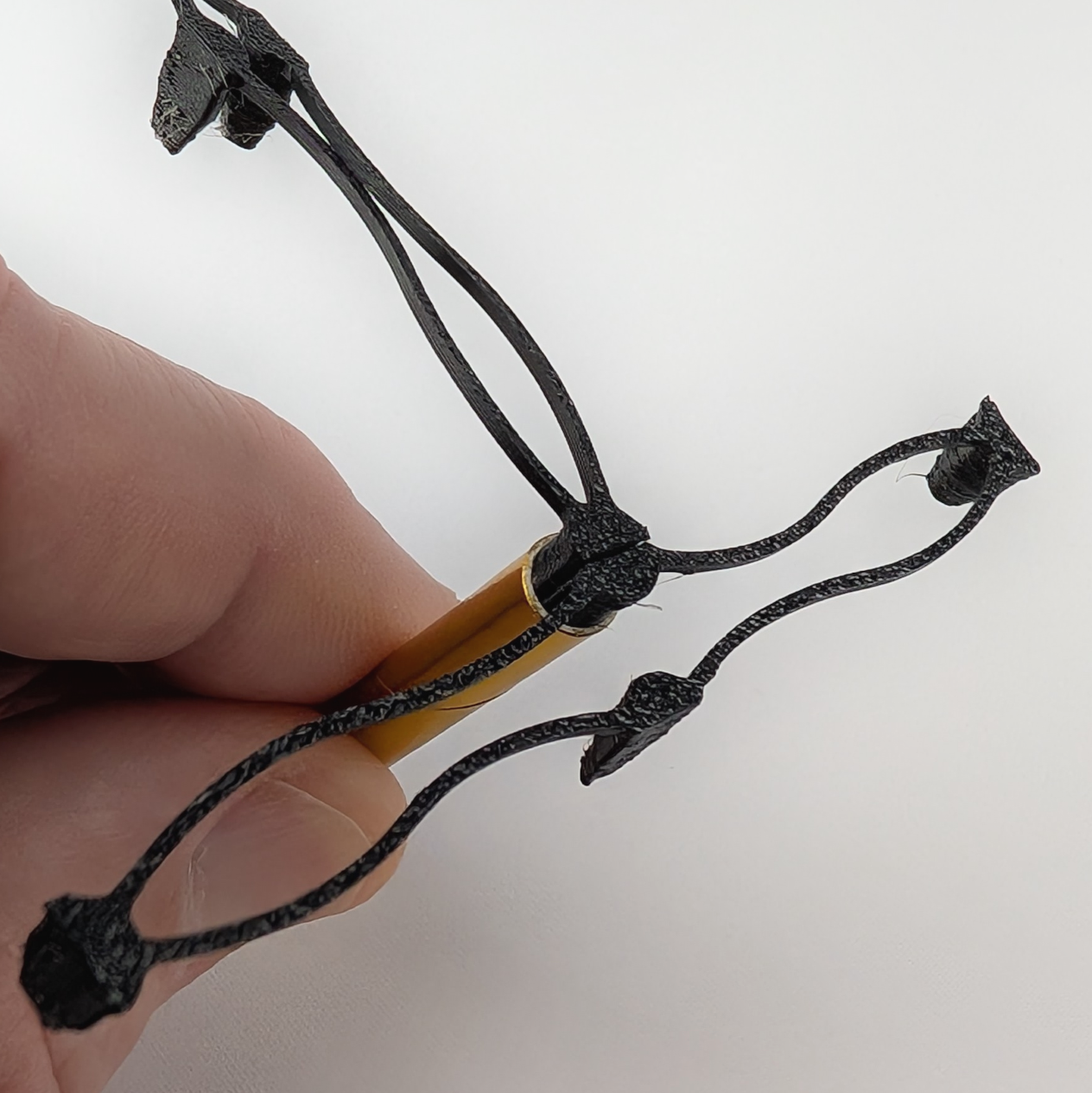
The STEAM Gem build system uses 3D printed tendons and paper drinking straws. Imagine a peg that is just the right size so that it fits snugly into the tip of the straw. Now split the peg into two halves and attach each tendon to one of the halves. The picture shows tendons from a spherical tensegrity. If you look closely you can see the two half pegs partially inserted into the straw tip. The tendons are 3D printed with a material called TPU, which is stretchy. There are youtube instructional videos available for all of the tensegrities that are offered for sale. If there is a tensegrity that you would like me to make available for purchase please let me know.
As of January 2026 these STEAM Gem tensegrities have been built:
Icosahedron the smallest of the three spherical tensegrities. 6 struts. Available in gold or red on Etsy.
Cuboctahedron, the middle child in the spherical tensegrity family. 12 struts. Available in red on Etsy.
Icosidodecahedron, the largest of the spherical tensegrities. 30 struts.
Genie bottle, a 2 layer prism tower tensegrity with 6 struts per layer.
Queen Genie, a 3 layer prism tower tensegrity with 6 struts per layer. Resembles a holiday tree.
Extended icosahedron. I discovered this one myself, but I doubt I was the first. Three squares are added to the “waist” of an icosahedron. Multiple extensions are possible, and they need not be coaxial, so many shapes are possible. More work is needed to get an even tension on all tendons.
Extended cuboctahedron. I discovered this one myself, but I doubt I was the first. Four squares are added to the “waist” of a cuboctahedron. Multiple extensions are possible, and they need not be coaxial, so many shapes are possible. More work is needed to get an even tension on all tendons.
Extended icosidodecahedron (aka the pineapple). I discovered this one myself, but I doubt I was the first. Five hexagons are added to the “waist” of a icosidodecahedron. Multiple extensions are possible, and they need not be coaxial, so many shapes are possible. More work is needed to get an even tension on all tendons.
Prism tensegrity torus with 14 layers and 4 struts in each layer. Inspired by Gerald De Jong’s video.